Mark Thompson/Getty Images
How potential ICE upgrades could soon give F1 power rankings a shake
This weekend's Canadian Grand Prix marks the final Formula 1 race before the FIA could give some power unit manufacturers the ability to upgrade their performance.
Additional Development and Upgrade Opportunities (ADUO) is a mechanism that has been built into the new power unit regulations, given their complexity and potential for significant variance in performance. Power units are homologated at the start of each season and not permitted for upgrade other than for reliability reasons, unless granted ADUO by the FIA.
ADUO only applies to the internal combustion engine (ICE) rather than the power unit as a whole, but can allow upgrades to multiple components. The FIA says the calculation of ICE performance is based on a range of factors including input shaft torque, engine speed, MGU-K power and a weighting to account for power sensitivity on lap time across measured laps. This will allow it to identify the best-performing power unit on the grid from Mercedes, Ferrari, Red Bull Ford, Audi and Honda.
At specific points in the season, the FIA will benchmark the performance of each ICE against the best-performing, and any manufacturer deemed to be between 2% and 4% off the best will receive one additional upgrade during this season – that can be applied as soon as the following race – as well as one additional upgrade for the following season.
If an ICE is judged to be more than 4% adrift of the best-performing, then two upgrades this season and two in the following season are permitted.
The FIA defines the areas open for upgrade as “certain elements of the ICE, engine exhaust system, turbo and waste gate/pop-off, ICE or exhaust-mounted electrical components and sensors, ERS (and associated cooling systems), the MGU-K, and the car’s Control Electronics, as well as certain hydraulic functions, fluids, and ballast.”
The original monitoring periods were equally split into blocks of six races across the 24-race calendar, but the postponement of the Bahrain and Saudi Arabian rounds has led to a reshuffle. Now, the first period ends after this weekend’s Canadian Grand Prix (round five), with the second period running until the Hungarian Grand Prix (round 11), and the third period until Mexico City (round 18).
There are concessions in the power unit cost cap to allow for developments, and any upgrade granted for introduction during a season cannot be carried over to the following season. A manufacturer is also ineligible to receive an at the end of the third and final in-season monitoring period if its power unit was not granted ADUO after the first two monitoring periods.
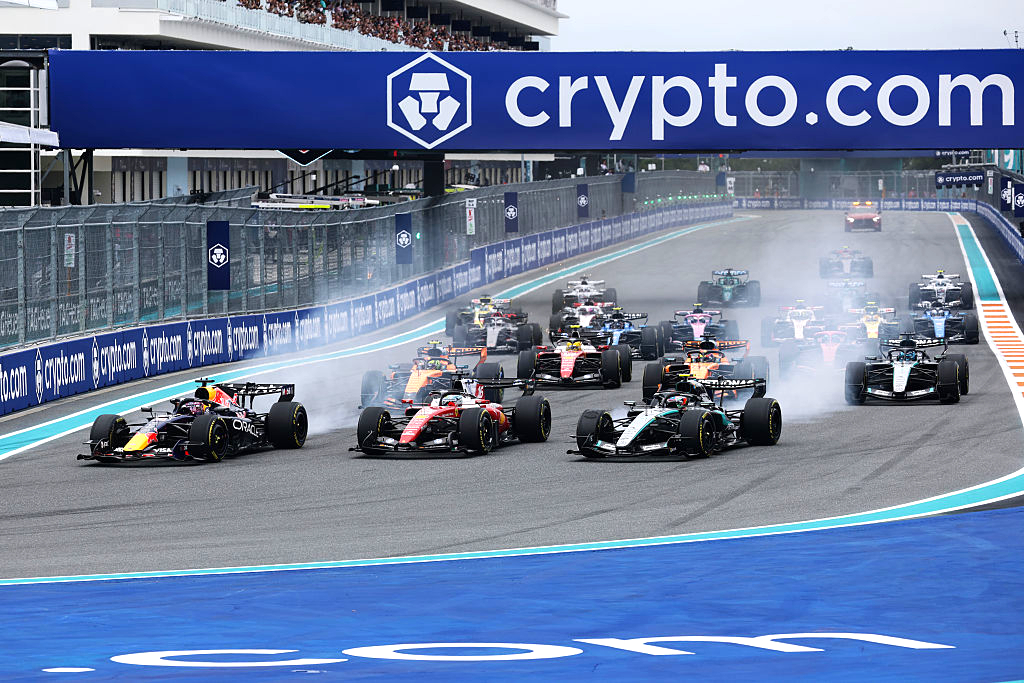
Mercedes-powered cars have won every Sprint or grand prix so far this season, with only Lando Norris leading home a one-two for McLaren in the Miami Sprint denying the works Mercedes team a clean sweep.
Presented by:


Chris Medland
While studying Sports Journalism at the University of Central Lancashire, Chris managed to talk his way into working at the British Grand Prix in 2008 and was retained for three years before joining ESPN F1 as Assistant Editor. After three further years at ESPN, a spell as F1 Editor at Crash Media Group was followed by the major task of launching F1i.com’s English-language website and running it as Editor. Present at every race since the start of 2014, he has continued building his freelance portfolio, working with international titles. As well as writing for RACER, his broadcast work includes television appearances on F1 TV and as a presenter and reporter on North America's live radio coverage on SiriusXM.
Read Chris Medland's articles
Latest News

Comments
Comments are disabled until you accept Social Networking Cookies. Update cookie preferences
If the dialog doesn't appear, ad-blockers are often the cause; try disabling yours or see our Social Features Support.